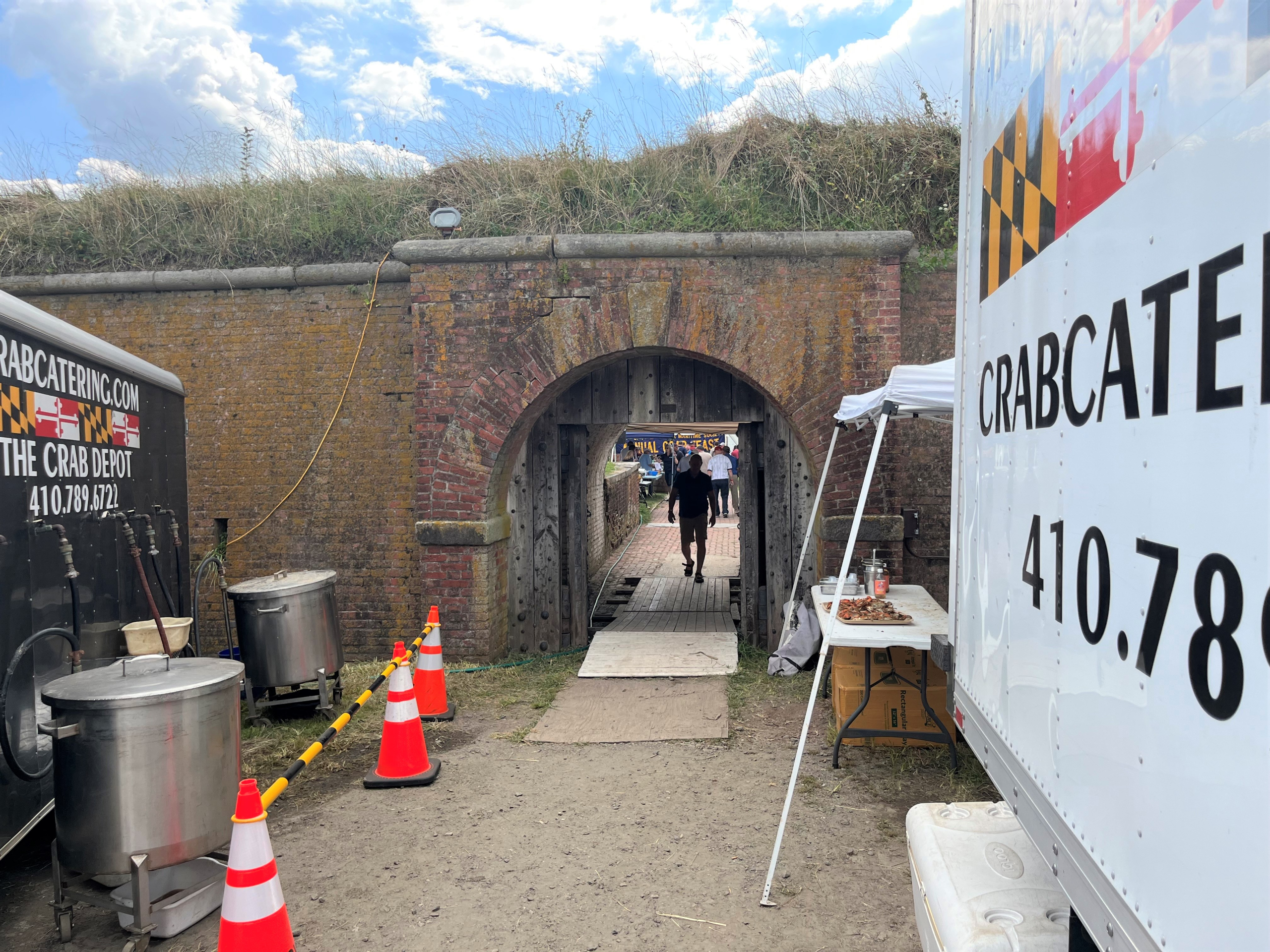

Crab feasts during the Maryland Blue Crab Season follow the Chesapeake Bay’s harvesting calendar from April 1 to December 15. Loads of jumbo, jimmy, bay, and female “sook” blue crabs weigh down the pots, but certain celebrations require a taste of the bay experience. Graduations, birthdays, anniversaries; and of course, major holidays from Mother’s Day, Memorial Day, Father’s Day, July 4th, and Labor Day drive a good old-fashioned crab feast. A feast fills a day of picking, while a meal serves as breakfast, lunch, and dinner. When sending out the invites, decide what you’re serving, a day event or a meal for a couple hours. Crab catering fits the bill for a full day event. Scheduling on the weekend maximizes the feast’s success. More participants can rsvp and spend time enjoying the festivities, which requires a professional caterer to prepare a menu for 100 or more guests.

Watch the weather and plan for your group size. Indoor facilities overlooking the Capitol may suit a humid day, while lined picnic tables at the local park serve as an ideal feast in early spring. Develop a theme that fits the venue. Tique torches, palm trees, white tapestries hanging from lines set up a rehearsal dinner feast. A firehall lined with picnic tables and draped crab paper with an area for an open bar and dance floor to get down to a local band surely sounds like a perfect invite to a graduation party crab feast. Select food favorites that accompany freshly steamed blue crabs: savory beef hot dogs, crisp garden salad, zesty shrimp salad, or even creamy macaroni salad. Picking your order up at the Crab Depot’s Crab House or booking our servers for an on-site crab steaming and hot dog grilling should address the needs of your desired event.

Either way, prepare for a chilled, social, interactive experience. Crab pros can show the novice crab feaster how to crack the crab open and where to find the flaky lump in the crab halves, plump jumbo in the back-swimming legs, and robust claw meat in the large pincers. Yes, the event becomes an expressive social event and as the night progresses, an all-out competition ensues to see who can scarf down the most steamed blue crabs! Remember, a feast also defines as a gluttonous, all-you-can-eat affair. Lastly, remember your hometown and get some brew and beverages that celebrate the community. A hoppy IPA surely toasts to Wilkes Barre PA’s many breweries, for example. Also, bread and butter corn from the local Amish farmers shows cohesion and appreciation for all who make up the community. So, what time makes for the perfect catered crab feast? In short, time you desire to spend with family and friends to bring the true-blue crab experience to your special memories.
(April 22, 2026 by Crab Depot’s Crab House)
Blue Crabs, an Appetite for Destruction!

Known for their rambunctious, wily behavior, blue crabs still get the distinction, “Beautiful Savory Swimmer.” The males’ blue and females’ red colored claws make for quite a display as they swim agilely through the waterways with their 8 legs and 2 paddle “flippers.” Their importance in the seafood deli case outmaneuvers their prowess in the water, however. Jumbo, lump and claw meat for recipes from crab egg benedict to crispy crab cakes move this delicacy to the forefront of any menu. Their appetite for clams, oysters, mussels, small fish, worms, aquatic plants, and floating nutrients transforms their meat into a taste of choice.

Resourceful and focused on survival, their mere presence in the Chesapeake Bay forecasts their eventual end: a festive crab feast with swinging mallets! With all their popularity, they surely know how to get around. With man’s help, they now populate areas of the Mediterranean, Black and North Seas. From Nova Scotia to Argentina and into the Gulf of Mexico, they search for nourishment and multiply quickly. Within these waters, the male crabs or “jimmies” search out fresher water for more nourishment and less competition, while females or “sooks” swim out toward the ocean for saltier water, better for spawning eggs. Incredibly, scientists tagged female crabs and charted some swimming upwards of 150 miles for more salinity waterways.

The sexes do cojoin in similar habitats of seagrass, oyster reefs, and marsh fringes to hide from predators and to give a hiding place for the young to grow into mature crabs. In fact, they resemble a “family” as the male crab cradles and holds the female crab as she sheds her last shell before reproducing the egg sac. In this vulnerable state with a soft shell, the male protects her from predators as she grows her hard shell back and prepares for her swim to saltier waters. All this appetite of the blue crab for survival only increases man’s crab pots and charting of these blue crab movements. The final destination, not the mouth of the bay, nor the tributaries of Severn River, but the wooden tables at your local crab spot. Carefully destruct the blue crabs armored shells and get to their salty-sweet meat!
(March 17, 2026, by Crab House)
How are Blue Crabs Different?

Hoisting a heaping bushel basket of blue crabs onto a wooden deck requires some muscle, but identifying male verses female musters up some skills! All blue crabs appear angry and snap aggressively at your rubber gloves and at each other, so the less time you spend handling them, the better. Plus, too much interaction with the crab tires them out and they’ll perish sooner. Even though they sport an olive-green appearance, they bear the name blue crab or in Latin, callinectes sapidus, which means “Beautiful Swimmer that is Savory.” When “grading” or sizing the crabs, the watermen will use their ability to quickly sight the difference between the male and female. Yes, they all have two pairs of claws, three pairs of walking legs, and two paddle-like legs, and remarkably walk sideways. Distinct appearance differences can make the grading process quick, efficient, and timely so the catch lives longer and reaches the crab house “without a hitch.”
If you’ve ever watched a commercial crabber and their wicked speed in sorting through crabs, you’ll see them separate a bushel of crabs from small to supers and male to female in a matter of minutes. A culling table on the boat makes the process quick with crabs measuring 5” plus, “keepers.” Smaller than 5” get tossed back into the bay. Three distinct features make it easy to sort between male and female. First, the males boast a bright blue, thicker front claw pair, while the females fittingly showcase red-tipped front claws. To give them female traits, some describe this appearance as “red nail polish,” but crabber beware. They will still snap viciously at you, so use caution! Secondly, the undercarriage of the male crab has a long pointy apron or abdominal flap. The Delmarva crowd quickly compared this feature to the Washington Monument. The females possess a “dome-like” appearance, described as the US Capitol. Even blue crabs caught in the Gulf of America sport DC’s iconic buildings! Thirdly, the males continue growing their entire lifespan of three years or so, but the females stop at maturity. The points on the top shell, however, keep growing on the females, so the crabber can quickly eye the bigger crabs as male and smaller as female. All three features do help in culling the crabs and the efficiency in delivering the catch.
Crab fans can thank the alacrity of these Chesapeake Bay watermen. Of course, transporting the catch in ideal conditions will ensure a 95% or better yield in a live crab delivery to the crab house. Reefer trucks, 50°F to 55°F with damp and ventilated conditions can keep the blue crab alive for up to 24 hours. Just make sure they don’t rest in a pool of water. Ironically, they will suffocate in these conditions. A successful delivery ensures massive steamed crab feasts and a mass of roe from the female “sook” crabs. When you know the difference, then it’s time to taste the difference. Which crab offers sweeter meat? Some say male “jimmy” crabs, while others attest female “sook” crabs. With your skills now in sorting between male and female crabs, it’s time for you to take the blue crab taste test!
Comments
2 responses to “What time makes for the Perfect Crab Catering Event?”
I would like fresh live blue crabs delivered to me
Hi Carla, Check out our Crab Depot site for LIVE Crab Delivery. Here’s a link for you. Thanks for reaching out!